Stephen Henneberry
島根県立大学 (The University of Shimane)
About
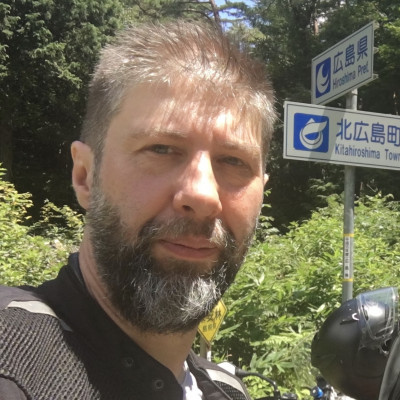
Stephen Henneberry is a Professor in Shimane who knows enough to realize he does not know enough. In his free time, he enjoys reading, motorcycle touring, and watching TV with his dog.Sessions
Presentation Using NotebookLM as a Reflective Tool for Oral Fluency Development more
Sat, Jun 13, 09:00-09:25 Asia/Tokyo
This presentation introduces a classroom-ready approach to using NotebookLM as a reflective tool to support the development of oral fluency in a university EFL context. Students record short audio journals several times per week, producing regular, low-stakes spoken output. They upload either a transcript or the audio file itself, which NotebookLM can transcribe; the resulting transcript serves as the basis for analysis. Best practices for generating accurate transcripts will be briefly outlined. While audio files may be uploaded directly, pre-generated transcripts are typically faster and more efficient for classroom use. Rather than requesting general corrections, students ask for feedback focused on recurring grammatical errors across their output. NotebookLM can analyze a single journal, a specific week, or all accumulated transcripts, allowing learners to control the scope of feedback. This flexibility helps students identify recurring problem areas, track changes over time, and select actionable points for reflection. By analyzing transcripts of their own spoken language, learners engage in metalinguistic reflection grounded in authentic L2 output. NotebookLM does not replace instruction or speaking practice but serves as a reflective guide, supporting a more intentional path toward oral fluency.
Presentation Building AI workflows: A practical approach for language teachers more
Sat, Jun 13, 11:20-11:45 Asia/Tokyo
Many language teaching tasks work better through structured AI workflows that coordinate multiple tools rather than relying on a single AI tool. For example, generating realistic multi-character conversations, providing scaffolded feedback that adapts to student responses, or managing feedback across many students often requires a sequence of coordinated AI actions. A typical workflow might allow students to record a spoken dialogue, have the audio automatically transcribed, receive targeted feedback on vocabulary, grammar, and fluency, and then obtain an overall evaluation or grade. This practice-oriented session presents how teachers can build such workflows using AI tools to complete multi-step pedagogical tasks. Co-presented by a language teacher with no programming background and an app developer, the session presents classroom-tested examples including generating multi-character dialogues, building personalised feedback cycles for student writing, and managing scalable homework correction. Participants will see how chaining instructions allows teachers to guide AI behaviour more reliably than relying on a single tool. The session also demonstrates how local tools can be combined with online services to improve privacy and reduce platform lock-in. Participants will leave with practical examples and a simple framework they can adapt to their own teaching contexts.