Not Logged In
You need to be logged in, be a member, and get a ticket to attend this session.
Presentation Second language acquisition (SLA) theory and CALL
The Revised Bloom’s Taxonomy Framework in EFL: Pedagogical Applications for Students’ Critical Thinking Development
The rise of EFL students’ GenAI-like writings has raised concerns about their critical thinking abilities. The revised Taxonomy of Educational Objectives (Krathwohl, 2002) offers a recognized framework for cultivating those cognitive abilities. While existing papers focus on the use of GenAI tools and its connection with Bloom’s taxonomy, the critical gap remains in understanding how to enhance EFL students’ critical thinking such as evaluation and creation in the age of GenAI. Grounded in a socio-cognitive framework, this study examines how EFL students’ higher-order thinking develops through writing tasks when spontaneous student-instructor conversations - Interactive Oral Assessments (IOAs) guided by the revised taxonomy, are used. A focus group of ten second-year English majors in an EFL Writing course participated in this qualitative project. Data from entry and exit meetings, audio-recordings, semi-structured interviews, writing samples, AI chat history were analyzed. A finding suggests that the intervention of IOA positively influences the students’ ability to analyze and evaluate the AI-generated content as critical steps in scaffolding their writing assignments. Additionally, emphasizing higher-order thinking processes has increased original argumentations in student works. The study indicates IOA is a potential assessment tool to raise EFL students’ awareness on how to use AI critically.
-
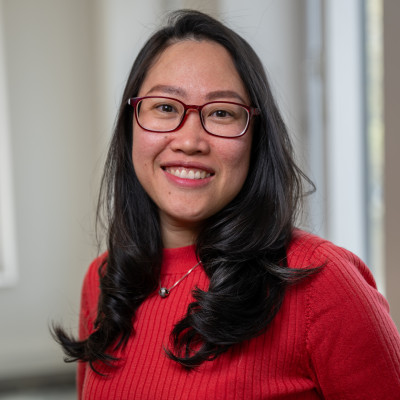
Hien Nguyen holds a Master’s degree in TESOL and is currently a freelance English tutor. She also works in Program Management for the full‑time Master of Science in Management at Nyenrode Business University in the Netherlands. Her research interests include EFL learning acquisition, AI‑supported language learning, the student support service ecosystem, and intercultural teaching and learning.
-

Dinh Thi Cam Loan is currently working as a lecturer at Nong Lam University HCMC. She holds a Master Degree in TESOL. Her academic interest is AI and its impacts, application in language teaching and learning.