Not Logged In
You need to be logged in, be a member, and get a ticket to attend this session.
Poster Presentation General CALL
Generative AI as an External Cognitive Scaffold: Reflections from an ADHD Language Educator
This poster reflects on how generative AI has supported my work as a language educator with ADHD, and how these same supports may reduce learning barriers for a wide range of language learners. While generative AI is often discussed in terms of productivity and content generation, less attention has been paid to its role in easing cognitive friction such as task ambiguity, task initiation difficulty, working-memory overload, and attention regulation.
Drawing on autoethnographic reflection, the poster identifies recurring AI-mediated behaviors that emerged in daily academic and instructional work: task clarification and instruction reframing, task chunking and sequencing, cognitive warm-up through drafting and outlining, real-time idea externalization, attention recovery, and low-stakes feedback. Although these behaviors align with ADHD-related executive-function challenges, they also address difficulties that non-ADHD learners experience intermittently, particularly in complex, high-cognitive-load language tasks.
A key observation concerns availability: generative AI provides continuous, on-demand access to cognitive support, lowering help-seeking barriers and enabling frequent, context-sensitive use. Using a light Universal Design for Learning lens, the poster argues that generative AI can reduce barriers by externalizing cognitive processes in ways that benefit many learners, not only those with diagnosed learning differences.
Implications for CALL pedagogy and accessibility-oriented design are discussed.
-
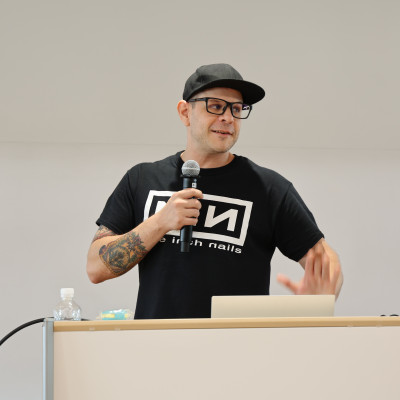
Research Map profile: https://researchmap.jp/robertd 1st edited book: Artificial Intelligence in Our Language Learning Classrooms (https://www.candlinandmynard.com/genai1.html) 2nd edited book: Artificial Intelligence in Japan’s Language Learning Classrooms (out soon!) Book #3: early proposal phase, looking for chapter authors. The book will focus on AI intersection with 3 key areas: Learner Identity, L2 Self, and community. If you are interested in submitting a chapter proposal, contact me.