Sessions / Poster Presentation


Enhancing English Reading Comprehension through Augmented Reality: A Study with Grade 2 Primary Students #4531
This research-based presentation examines how Augmented Reality (AR) technology enhances English reading comprehension among second-grade primary students in Thailand. Traditional reading instruction often lacks interactive elements, leaving young learners struggling to connect vocabulary with real-world contexts and maintain engagement. This study addresses these challenges by implementing AR-enhanced reading activities. Grounded in Constructivism Theory and the Simple View of Reading framework, this quasi-experimental study employs a one-group pretest-posttest design with 55 Grade 2 students at La-orutis Demonstration School, Lampang. The intervention integrates AR technology that overlays virtual objects, animated scenes, and interactive elements onto physical reading materials across four narrative passages. The eight-week program includes AR station rotations, interactive scene exploration, reading puzzles, and AR-based assessments. Reading comprehension is measured across four dimensions: vocabulary recognition, main idea identification, contextual understanding, and content interpretation. Preliminary findings suggest significant improvements in post-test scores, enhanced student motivation, and deeper comprehension through visual-textual connections. This presentation demonstrates practical CALL implementation for young learners, offering evidence-based strategies for integrating immersive technology into language education. Attendees will gain insights into AR tool selection, activity design, and assessment methods applicable to primary-level English instruction in technology-enhanced learning environments.
Using Generative AI for Self-Editing in Japanese University EFL Writing: Examining the Role of Explicit Instruction on Writing Development and Learner Motivation #4610
This classroom-based study examines whether the use of generative AI for self-editing, combined with explicit instruction, influences CEFR A1–B1 Japanese EFL learners’ writing development and affective factors related to English learning. Participants were 50 first-year students enrolled in two compulsory English courses at a national university in Japan during the second semester of the 2024 academic year. One class was assigned to an experimental group, in which students were required to use ChatGPT for self-editing and received explicit instruction on its effective use, while the control group was allowed optional AI use without explicit guidance. Writing development was measured using pre- and post-test essays assessed by word count and a six-category analytic rubric, and affective factors were examined through questionnaires. A significant increase in word count was observed over time in both groups; however, no significant differences were found between the groups in word count/rubric scores. Increased motivation and self-efficacy were reported in both groups. These findings suggest that over a single semester, writing development among lower-proficiency learners may be influenced more by increased opportunities for learner output than by individualized AI-generated feedback alone. The study discusses implications for CALL-oriented instructional design that leverages AI to promote productive output.

Preliminary Research on the Effects of Generative AI Feedback on L2 Speaking Complexity, Accuracy, and Fluency During Task Repetition #4611
This preliminary study examines how generative AI feedback influences speaking development during task repetition (TR), focusing on complexity, accuracy, and fluency (CAF). Thirty-one beginner–intermediate-level freshmen and sophomores at a Japanese junior college produced monologues of up to one minute on smartphones. Recordings were automatically transcribed using Whisper, and GPT-4o generated written feedback highlighting grammatical issues and presenting a model text. After reading the feedback, learners repeated the speaking task.
Paired-samples t-tests indicated significant changes across several CAF measures. For complexity, mean length of AS-units increased from 8.1 to 9.9 words (≈22% increase, p < .01, d = 0.65). For accuracy, the percentage of error-free AS-units improved from 62.3% to 75.9% (≈22% increase, p < .05, d = 0.40), and errors per 100 words decreased from 7.0 to 4.0 (≈43% reduction, p < .05, d = 0.49). For fluency, filled pauses decreased from 0.9 to 0.5 (≈44% reduction, p < .05, d = 0.45). Speech rate (WPM), repetitions, and self-corrections did not show significant change.
Previous task repetition research typically reports stronger gains in fluency. In contrast, these findings suggest generative AI intervention may shift learners’ attention toward linguistic form, producing larger improvements in complexity and accuracy than in fluency.

Student Engagement in Interactive Language Activities through VR #4616
Recent studies on language learning using virtual reality (VR) have suggested that immersive VR environments using head mounted displays (HMDs) provide realistic simulations for authentic language interactions (Dooly et al., 2023; Lui et al., 2023). However, few studies have examined whether VR leads to better interactive language learning than in-person learning. This study aims to explore how Japanese university students assess their interactive language tasks in an HMD avatar-enhanced immersive VR environment, as opposed to those in a conventional in-person classroom. Students in four undergraduate English courses were encouraged to actively engage in verbal communication tasks grounded in a notional-functional approach to improve their communication skills, while working on pronunciation, speaking fluency and vocabulary in a real-time interactive setting. The findings from the questionnaire, which was based on the intrinsic motivation inventory and aligned with the principles of self-determination theory (Deci & Ryan, 1985), suggest that employing HMD VR as an instructional intervention in the classroom is effective in improving students’ motivation and engagement and easing feelings of discomfort when speaking. The poster presentation also discusses the potential of this method for effective differentiated instruction and addresses some major challenges students faced in the VR mode in this study.

Designing AI-Mediated Feedback Activities for Academic Writing #4619
In recent years, generative AI tools such as ChatGPT have become increasingly present in EFL and ESL writing classrooms, leading many instructors to consider how these tools can be used effectively and ethically to support student writing. This poster describes the design and implementation of two ChatGPT-based feedback activities used in an academic writing course for first-year Japanese university students in an intensive English program. Taking an iterative approach, the second activity was developed in response to student feedback from the first. In both activities, students first wrote their essay drafts by hand in class without the use of AI or other assistance, and then entered a common prompt to ChatGPT to elicit corrective feedback on their grammar and vocabulary use. Students reviewed the AI-generated suggestions and applied selected feedback during guided revision. The poster outlines this process and draws on data from post-task student surveys to highlight student perceptions of effectiveness, areas of difficulty, and practical considerations for classroom use. Participants are invited to reflect on how this approach can be further refined to integrate generative AI into writing instruction while maintaining a human element and supporting the development of students’ writing skills and voice.

Digital Scrapbooks for Basic Presentations #4638
In My Life New Edition by Matthew Taylor and myself (Nellie’s Publishing) is a scrapbook-based presentation and oral communication textbook for student-centered teaching and learning. Based on motivation and engagement principles explained by John Dewey and Zoltán Dörnyei. The coursebook centers around students creating scrapbook pages about their life to give presentations or as something to spark conversations. Paper scrapbooks can be used, or digital visual aids with apps like PowerPoint/Keynote/Google Slides, digital photos stored on computers, tablets, or smartphones, or a hybrid paper/digital format such as creating the scrapbook page on paper scrapbooks for classroom small group work and then taking a digital photo or series of photos projected on a screen for presentations performed in front of the whole class. This project has also been used in conjunction with Zoom in Breakout Rooms. In addition to explaining the digital formats described above, the structure of a unit, a list of the activities in one unit, and a sample syllabus covering the whole year are described on the poster Dewey, J. (1938). Experience and education. New York: Macmillan. Dörnyei, Z. (2001) Teaching and Researching Motivation (Applied Linguistics in Action). London: Pearson Education ESL.


Balancing Rigor and Enjoyment: Cooperative Video Games as Joyful Teaching in EFL #4642
This poster explores joyful teaching as a CALL-informed approach to EFL instruction, addressing declining learner motivation caused by grammar-heavy, teacher-centered, and exam-driven practices. While such methods improve short-term test scores, they often lead to fatigue, anxiety, and negative attitudes toward English. For example, a class spends an hour teaching only grammar, students get bored, and they also be forced to focus on grammar study for the Common Test for University Admissions.Drawing on experiences in English literacy courses, the poster presents joyful teaching practices, including video-based tasks, digital and analog games, skits, and role-playing. These activities foster natural grammar and vocabulary acquisition through interaction, collaboration, and emotional engagement, without lowering academic rigor. Observations show increased student participation, engagement, and confidence.The poster also discusses “not joyful” examples, like unclear digital game instructions causing confusion or role-plays that stress shy learners or overemphasize competition. They show even well-intentioned activities can fail if they do not match student readiness or classroom dynamics. Joyful teaching requires careful planning, attention to learner needs, varied materials, and emotional scaffolding, supported by institutional measures like reducing teacher workload. Attendees gain practical ideas for implementing engaging, CALL-informed activities that balance enjoyment with meaningful learning in EFL classrooms.

AI Feedback Pilot: Science Majors' English Proficiency with CBI Content #4644
Science university students show moderate willingness to improve English proficiency yet hesitate to speak due to performance anxiety. However, instructors often rely on subjective evaluations, limiting data-driven instruction amid tight budgets and time shortages. Surveys reveal demand for field-aligned texts matching proficiency levels, while instructors prioritize preferences or school requirements.Beginning in April, this study applies objective AI evaluations so students know where to improve. English Language Speech Assistant (ELSA) for Schools measures pronunciation, writing, and comprehension gains using science materials.Two second-year science classes complete progress monitoring from Week 1 to Week 16 across English skills.Weekly ELSA feedback supports ongoing language practice through custom tasks. These tasks, tailored to science, technology, engineering, and mathematics (STEM) content through content-based instruction (CBI), engage discipline-specific interest with speaking practice for presentations and optional comprehension activities. Week 1 includes a proficiency test and pre-survey on confidence, followed by weekly ELSA practice. Week 16 features a post-survey and ELSA assessment comparing baseline gains. Data include Common European Framework of Reference (CEFR) baselines, pre- and post-surveys, and scores in pronunciation, fluency, and grammar. This study documents CBI–ELSA integration for STEM majors, quantifying improvements through ELSA’s visualization, targeted feedback, and dashboards showing results with greater accuracy.

EGAP Writing and Feedback with GoogleSheets: Development and Reflection #4647
As labour-doing technologies become more prevalent for general use in wider society (and educational institutions in particular), instructors may find the need for more nuanced methods with which to teach writing in English for General Academic Purposes (EGAP) contexts, to emphasise the components, skillsets, and steps necessary to create a deductive logical essay. Drawing from the scaffolding principles of Constructive Alignment (Biggs & Tang, 2011) and with consideration of GoogleSheet’s technological features (Kozma, 1991) this poster covers the development of a directly-shared GoogleSheet template to support (via formulas and hyperlinked resources) first-year university students’ initial foray into structure-and-citation focused essay-writing. In addition, the methods and formulas employed in its creation, as well as students’ positive (support-materials, sentence-level emphasis, citation guidance, portability, accessibility) and negative (digital literacy requirements, accountability, privacy) reflections on writing an essay with said GoogleSheet will be discussed. Though such an approach is unlikely to be a universal treatment for all instructors, students, and classrooms, it is hoped that this poster presentation will provide food for thought – along with some takeaway ideas and examples – for instructors considering creating similar online, hyperlinked instructional materials as bridge between paper-based and computer-based writing in the AI age.
Why English TV Shows and Movies can improve your English #4653
Through collecting data on English aptitudes, it has been proved that students learn more from looking at English films and TV shows than they do learning from textbooks in the classroom. Many Taiwanese students already start Learning English in Kindergarten, particularly in those schools that offer a bi-lingual curriculum. But it is those students who continue to hone their skills via English-speaking TV shows and Movies who get ahead and begin to speak like Native Americans. Netflix, Disney+, Google and Amazon all offer interesting ways to improve Students’ English. By focusing on Students’ needs and interests, their desire to improve their English skills is immeasurably heightened. In this paper, I want to highlight new approaches on the ways and means to a higher command of English usage through looking at English programs on the screen.

Creating Text Analyzers with Claude AI #4657
This poster presentation will explain how to create text analysers using Claude AI to write the code necessary. With some specific prompt engineering, the AI can be trained to produce tools that give highly specific feedback in formats that are clean and crisp. With only a few simple steps in the vibe-coding process, the poster will demonstrate both early (simple scoring and word counting) and more developed examples (descriptive feedback comments, APA corrections, Fry Readability and CEFR scores) that were created in just a few minutes to great effect (detailed tailored feedback output). Attendees who bring an internet-ready device should be able to create a running analyzer on the spot and test it out immediately. The presentation will also show examples of output from each of the engineered analyzers with clearly defined limitations and possibilities of the tool Claude AI that is free to use and easily adaptable and embeddable to your service of choice or within its own system. No previous coding skills are necessary, but the created code will be displayed for all to see and share via QR codes.
Developing R-controlled Vowels Pronunciation Skills Through Interactive Animation in Grade 3 Phonics Instruction #4671
Can interactive narrative stories effectively improve young learners' pronunciation of challenging English vowel patterns? This study investigates R-controlled vowels pronunciation development among 72 Grade 3 students at Laor-utis Demonstration School, Lampang through teacher-created interactive animation stories. The research employs a pre-experimental one-group pretest-posttest design during the second semester of 2025. Over eight weeks, students engage with four animated story episodes where they complete missions requiring reading aloud specific R-controlled vowel words. The teacher facilitates learning by encouraging participation, building confidence, and providing immediate corrective feedback within the story context. This approach addresses a critical literacy gap: R-controlled vowels represent complex phonetic patterns that confuse young learners. Unlike traditional drill-based practice, narrative-driven animations create meaningful contexts where students read aloud to advance stories, transforming pronunciation from isolated skill practice into purposeful communication. The teacher's facilitation role—motivating students, reducing speaking anxiety, and providing real-time correction—proves essential. The study measures pronunciation accuracy and classroom participation through pre-post testing and behavioral observation, demonstrating whether this teacher-mediated, story-based approach significantly improves pronunciation skills while fostering engagement and confidence in oral reading.
Making the Writing Process Visible: Role-Restricted AI Use in a Newspaper Project #4672
This classroom-based inquiry explores the use of generative AI to support, rather than replace, the writing process in a first-year university reading and writing class. While AI tools are often criticized for collapsing planning, drafting, and revision into a single output, this project examined the question: How does restricting AI to specific roles within the writing process influence student engagement with planning, drafting, and editing? Over a four-lesson newspaper project, students created three texts using role-restricted AI functions: generating and outlining ideas (planning), modeling genre (drafting), and improving language (editing). Students documented prompts, AI outputs, revisions, and reflections throughout the project. Teacher observations, reflections, and informal student feedback were considered to identify patterns in AI use and writing development. The outcomes suggested that role-restricted AI use supported idea development, genre awareness, and revision depth. However, challenges included over-reliance on AI-generated phrasing and limited critical evaluation of edits. These findings offer practical guidance for integrating AI into writing instruction while maintaining learner agency, transparency, and process-oriented pedagogy.

Arizona AI: A Longitudinal Study of AI-based AWCF Outcomes in Japanese EFL #4682
This poster reports final results from a 2025 Panasonic Education Foundation–funded longitudinal study examining the sustained impact of Arizona AI, a researcher-developed AI-mediated automated written corrective feedback (AWCF) tool on English paragraph writing among 120, 2nd-grade Japanese high school students. The study represents the conclusion of interim findings previously presented at the 2025 JALT International Conference in Tokyo, extending earlier analyses to a full instructional cycle.
Using repeated baseline–midline–endline measures, the study analyzed changes in human-rated writing performance across multiple rubric categories, including structure, grammar, transitions, and sentence complexity. Results show steady improvement over time, with the strongest gains occurring when AI feedback was embedded within a structured classroom workflow rather than used as a stand-alone intervention.
The findings speak directly to the conference theme “Prevail or Fail?” by identifying a central risk in CALL adoption: AI feedback systems that succeed technically but fail pedagogically when learner scaffolding and feedback literacy are insufficient. Implications are discussed for sustainable AI integration in EFL writing instruction, rubric-aligned prompt design, and teacher mediation strategies that enable AI feedback to prevail beyond novelty effects.

Surviving AI - Project-based Communication Teaching #4693
Alma Publishing
Stephen Richmond, Bukkyo University, and Bruno Vannieu. Alma Publishing In the age of AI, what can motivate our students to study English? It's not obvious, since all the tasks traditionally performed in language classes can now be done in seconds by AI, and students know it. We will show how we can still achieve this in a university communication course by putting students in a situation where they have a powerful human experience, where something obvious “happens.” The human experience in question is to carry out a simple, achievable, and satisfying communication project during each class. It's a bit like building a house each time: they acquire the materials, learn a specific technique, draw up the plans, and then build the house. What kind of project is possible at the beginning of the first year? It is to collaboratively create conversations in the target language during each class. We will show how to do this in practice, at the low-intermediate level (CEFR A2), in CALL classrooms or in standard classrooms.

How to get Funded - Kaken #4706
This poster, presented by RDR Services, provides a practical overview of key considerations for writing a KAKEN (科研費) grant proposal. Applying for KAKEN can be challenging, particularly when trying to communicate a complex research idea clearly within a limited space. The poster summarizes how proposals are typically evaluated, with a focus on research significance, methodological feasibility, research capability, and international relevance. In addition, it offers concise, experience-based tips for presenting proposals in a way that is accessible to a broad range of reviewers, who may not be specialists in the applicant’s field. Attention is given to clarity of writing, realistic project design, and the effective use of supporting evidence and visuals. The poster also briefly introduces KAKEN review support offered by RDR Services, including feedback from previous grant recipients for those seeking additional input on their applications.

When AI Participates: Generative AI and the Sociocultural Conditions of Language Learning #4539
Generative AI is increasingly embedded in language learning contexts as a language-producing system that interacts with learners, models, amplifies, and in some contexts actively reshapes linguistic norms, while influencing language across educational and digital spaces. This poster examines the sociocultural consequences of generative AI when it functions in the role of a participant rather than solely as a mediating tool. Here, participation is understood as a functional and relational role in interaction, not as evidence of intention, consciousness, or autonomous agency. From a sociocultural perspective, AI participation reshapes communities of practice and speech communities by contributing to norm-setting, authority, and legitimacy. In some contexts, AI stabilizes dominant registers and tones; in others, it amplifies, introduces, or accelerates emerging norms, including slang, euphemism, and ideologically charged language. When AI produces language alongside learners, assumptions about effort, authenticity, and developmental trajectories are reconfigured. Learner identity, investment, motivation, and affect are shaped through altered experiences of belonging, safety, anxiety, and recognition as legitimate speakers. By foregrounding AI participation, this poster isolates how sociocultural effects emerge through norm circulation and co-construction, offering a conceptual entry point for examining how participation itself is being redefined in AI-mediated language learning contexts.
Comparing Collaborative and Individual Writing in an EFL Academic Writing Course: A Corpus-Based Analysis #4577
This corpus study uses a quasi-experimental within-subjects design to compare student writing performance across collaborative and individual writing conditions using measures from the CAF (Complexity, Accuracy, Fluency) framework. Previous research suggests that collaboratively written texts are generally shorter and more accurate than texts written individually. However, it remains unclear which specific linguistic features are affected by collaborative writing (CW), possibly due to substantial variation in how written output has been measured across studies. The present study constructs a learner corpus to compare collaborative and individual writing using measures from the CAF framework. In addition, specific linguistic features, such as the accuracy of clausal subordination (e.g., conjunction use), are analyzed. The data are drawn from thirty-eight first-year Engineering students from two sections of an English academic writing course at a private Japanese university during the fall semester. Over the semester, students completed eleven in-class paragraphs collaboratively and eleven paragraphs individually for homework on different topics, resulting in a learner corpus of writing produced under both collaborative and individual conditions. The poster will also discuss methodological decisions involved in constructing the learner corpus, including issues related to digitization and annotation. Preliminary analyses of the data will be presented.
Extensive RPGing: Reimagining Extensive Reading Through Role-Playing Video Games #4592
Extensive reading has a well-documented history of support in second language education research, but some of today's learners may be reluctant to engage with traditional print-based reading materials outside of the classroom. This poster presentation introduces extensive RPGing as an approach that includes narrative-driven role-playing video games as a digitally mediated option for students engaging in extensive reading activities. In many RPGs, reading is an essential part of the play experience, with players needing to read and understand dialogue, menus, item descriptions, quest instructions, and other text in order to progress the story. The poster explains what extensive RPGing is, how it compares to more traditional extensive reading approaches, and draws on observations and student-generated data from early classroom implementations. While students who chose to participate reported high engagement, participation itself was limited. Challenges included students who do not play video games, skepticism toward games as learning materials, and uncertainty about selecting appropriate titles. Rather than arguing to replace other methods and materials, extensive RPGing invites participants to consider learners’ existing media consumption habits and whether these habits can be leveraged to support language learning among interested students.

Prevail or Fail? Teacher and Student Experiences Using AI in a Second-Year Japanese University Classroom #4594
This poster session will examine the use of activities that incorporate free, online AI applications in a Japanese, intermediate EFL, second-year university classroom. It will focus on both teacher and student experiences. The presenter will report on the students’ use of AI tools to develop reading, listening, speaking, and researching skills. Specifically, activities described include having students creating their own reading and listening texts with ChatGPT and Luvvoice.com, co-writing texts with ChatGPT, and working with AI applications to scaffold their research and planning for presentation projects. This poster session highlights challenges and successes encountered during the process of integrating these AI activities. Specifically, concerns relating to ethical issues, inaccuracies, and misinformation associated with using AI and how the students were guided in these areas. Selected teacher and student reflections will be highlighted to show key moments of success, frustration, and the pedagogical puzzles that emerged in piloting these AI-supported activities. The ultimate goal in sharing this information is to stimulate discussions with audience members so that they might reflect on their own teaching contexts, and to exchange practical ideas so that teachers can prevail, rather than fail, in their exploration of AI as an effective tool for language development.

Limits and Challenges of AI-Assisted Academic Writing Revision Among Medical Students #4607
AI tools have been promoted as effective supports for second language academic writing, yet classroom-based evidence suggests that their educational impact depends on instructional design. This study reports preliminary findings on how first-year students at a private medical school in Japan used ChatGPT while revising a scientific research paper in an English academic writing course. Students revised the Introduction of an Introduction-Methods-Results-Discussion-formatted paper using ChatGPT and submitted their conversation histories. Example prompts, written in English, were provided to encourage structured analysis and editing rather than direct rewriting. Ninety conversation histories were analyzed to identify patterns of prompt use, and informal interviews supplemented interpretation. Although most students revised their writing, nearly two-thirds struggled to use the example prompts as intended. Common issues included partial prompt use, combining multiple writing tasks in a single prompt, or abandoning the provided prompts in favor of short, general instructions. Interviews suggested that English-language prompts, perceived prompt length, and limited understanding of how prompts function contributed to these outcomes. Overall, the findings suggest that weakly guided AI integration may reinforce surface-level revision behaviors and prompt design must account for learner proficiency, language preference, and AI literacy if AI tools are to support academic writing development.

AI-Driven Tools in ESP: Successes and Setbacks in Boosting Oral Skills for Business Undergraduates #4488
The escalating demand for business graduates to communicate effectively in globalized settings underscores the need to strengthen listening and speaking skills in English for Specific Purposes (ESP). Traditional courses at Foreign Trade University HCMC Campus often favor content delivery over oral competence, but AI-driven tools integrated with multimedia present innovative opportunities. This study examines AI speech recognition, captioned business videos, digital storytelling, and podcasts to boost oral proficiency among undergraduates in Banking and Finance, Accounting, Business Administration, and Logistics majors, within ESP courses like English for Business Communication, Commercial Correspondence and International Business Contracts. Using a mixed-methods quasi-experimental design, the semester-long intervention merged authentic inputs (e.g., negotiation role-plays) with AI outputs (e.g., automated feedback on presentations). Pre- and post-tests measured quantitative gains, while reflections and interviews provided qualitative insights. Successes included marked improvements in fluency, pronunciation, and comprehension, plus enhanced motivation and confidence in workplace simulations like client meetings. Challenges included limitations in AI's recognition of accented speech, excessive dependence on the tools by learners, and early reluctance to adopt digital activities. This research advances CALL by adapting AI for business ESP, promoting learner-centered authenticity, and offering lessons for Vietnamese higher education curricula.

Exploring Prosodic Prominence Control in Synthesized Golden Speaker’s Speech for Pronunciation Training #4496
Advances in text-to-speech (TTS) technology have created new opportunities for pronunciation training. Zero-shot TTS (ZS-TTS) models, for example, are capable of synthesizing speech in a learner’s own voice while producing more native-like pronunciation, the so-called golden speaker. In addition, some models support instruction-based generation, which allows for expressive modifications such as emphasizing specific words or inserting breath pauses and laughter within an utterance. Prosodic elements, such as prominence, affect listeners’ intelligibility and can modify the meaning of discourse. However, computer-assisted pronunciation training (CAPT) research has largely focused on segmental features. This study investigates whether instruction-based ZS-TTS can generate pedagogically exaggerated prominence patterns using the learner’s voice, with the potential to enhance pronunciation and listening training. Using CosyVoice2, a ZS-TTS model with emphasis instruction control, this study investigates whether marking target words with those instructions results in measurable acoustic changes associated with prominence. Controlled sentence pairs will be synthesized in neutral and emphasis-marked conditions, including multiple-hypothesis cases in which different words within the same sentence are emphasized to alter the discourse nuance. Acoustic analyses will focus on relative pitch variation, word duration, and intensity. This exploratory work aims to examine whether instruction-based prominence control is consistent and pedagogically meaningful.

Efficacy of English Accent Coach in Higher Education for Improving Pronunciation #4497
This presentation reports on a semester-long study at a Japanese university examining the effectiveness of the pronunciation practice website English Accent Coach in improving English pronunciation among first-year students. Although pronunciation instruction is essential for spoken intelligibility (Levis, 2021), it is often underemphasized due to teachers’ limited confidence or perceptions that it is less important than other language skills (Mahmood et al., 2024). This study investigated whether regular, structured online pronunciation practice could lead to measurable improvement over one semester. Participants were divided into treatment and control groups. The treatment group used English Accent Coach as part of their weekly homework, engaging in guided pronunciation activities with automated feedback. The control group followed the same curriculum but did not use the platform regularly. Both groups completed identical pre- and post-tests measuring pronunciation accuracy and intelligibility. Preliminary results indicate greater improvement in the treatment group than in the control group. These findings suggest that online pronunciation tools may help address gaps in contexts where pronunciation instruction is limited, contributing to ongoing discussions in CALL research on effective technology use for developing spoken language skills.

Design and Preliminary Evaluation of a Document-Grounded Multimodal AI Teaching Assistant for CLIL in STEM Laboratories #4503
While XR-based instructional systems have been widely explored in language and STEM education, their use in hands-on laboratory contexts is often limited due to physical constraints. This study addresses this limitation by developing a smartphone-based wearable camera integrated with a vision- and voice-enabled AI that allows learners to share their visual perspective with a verbal AI Teaching Assistant (TA), supporting CLIL in STEM laboratories.
Two complementary systems are presented within the same document-grounded, multimodal interaction framework. In both systems, real-time visual input enables equipment identification and situated interaction. In the electrical engineering context, the TA facilitates procedural English for laboratory actions and conceptual understanding aligned with laboratory materials uploaded to AI. In the mechanical engineering context, the system emphasizes laboratory safety and procedural preparation, supporting discussion of equipment usage and safety practices grounded in uploaded instructional documents.
Preliminary evaluation was conducted, focusing on system reliability, response accuracy, and pedagogical suitability. Results suggest that the camera-mediated, multimodal design supports situated language use and that an encouraging interactional tone reduces learner hesitation when using English in STEM laboratory settings. A large-scale study involving 100 engineering students is planned for April.

Cancelled Rethinking Final Exams: Exploring Online Assessment to Reduce Cheating and Support Critical Thinking #4509
Paper-based final exams remain common in many higher-education EFL contexts of Uzbekistan, yet they are often associated with high levels of cheating, extensive marking time, and frequent post-exam grade disputes. These challenges raise concerns about fairness, teacher workload, and the limited opportunities for students to demonstrate meaningful language use.
This poster presents an ongoing classroom-based project that explores the use of online final exams as an alternative to traditional paper-based assessment. The main aim is to examine whether online assessment can reduce opportunities for cheating, promote critical thinking, and make the final exam process more manageable for teachers. The project is situated in a university EFL context where final exams are being redesigned from paper-based tests to online, open-ended, task-based assessments.
Final exam tasks focus on real-life issues and require students to analyze problems, express opinions, and propose solutions using English. Exams are conducted in an open-book format to discourage memorization. An analytic rubric covering task achievement, critical thinking, language use, and organization is shared with students in advance. AI-supported tools assist with feedback and language analysis, while teachers retain control over final grading.
The poster discusses early observations, challenges, and practical implications for CALL-based final assessment in higher education.
Evaluating COIL's Impact on Intercultural Competence through Deardorff's Process Model #4511
Although technological advances enable students to engage with international peers and develop intercultural competence, such opportunities remain limited. Collaborative Online International Learning (COIL) offers an alternative pathway for fostering intercultural competence without physical mobility. Drawing on prior exposure to multiple COIL projects, this study explores COIL’s potential to promote intercultural learning in virtual contexts.
Guided by Deardorff’s Process Model of Intercultural Competence, the research investigates how COIL participation influences students’ attitudes, skills, cultural self-awareness, and intercultural communication. A mixed-method design was applied. Quantitative data were collected through pre- and post-project surveys with 18 students from the University of Applied Sciences Landshut (Germany) and National Taipei University (Taiwan), measuring self-reported changes in attitudes, knowledge, and internal and external outcomes. For qualitative depth, five semi-structured interviews were conducted with students from Germany with prior COIL experience, exploring on their reflections on intercultural learning processes.
Initial findings reveal increased cultural self-awareness, enhanced recognition of cultural differences, and more adaptive communication strategies. However, students also reported challenges related to distance and limited online interaction. Conducted as part of a Bachelor’s degree in New Media and Intercultural Communication, this study provides insights for educators and researchers implementing COIL-based virtual exchanges in higher education.

Automatic Corrective Feedback on L2 Speaking: A Systematic Review of CALL Research #4516
This study reports on an ongoing systematic review of empirical research on automatic corrective feedback for second language (L2) speaking in CALL contexts. As AI-mediated and ASR-based feedback tools are increasingly integrated into speaking practice, research findings remain dispersed across feedback designs, outcome measures, and instructional settings. In addition, due to the rapidly evolving nature of language learning technologies, there is a continual need for up-to-date research syntheses. Following PRISMA-informed procedures, an initial search was conducted to identify studies examining automated feedback systems targeting L2 speaking. Preliminary screening has identified a subset of studies addressing speaking-related outcomes, with most research focusing on overall speaking proficiency, grammar, and pronunciation. In contrast, fluency-related outcomes appear to be comparatively underexplored. Studies are being coded for feedback modality, targeted speaking construct, learning context, and outcome domain, including both linguistic development and learner-related variables such as motivation, confidence, and willingness to communicate. By synthesizing methodological patterns and reported outcomes, the study aims to identify gaps and design challenges in current CALL research on automatic speaking feedback. The findings will inform CALL researchers and practitioners about how automatic feedback is currently operationalized and highlight directions for future research on technology-mediated support for L2 speaking.



AI-Generated Elicited Imitation Materials for EFL Speaking: Comparing three LLMs #4533
Japanese EFL learners struggle with speaking comprehensibility and intelligibility, and while High Variability Phonetic Training (HVPT) and Elicited Imitation (EI) show promise, creating level-appropriate EI materials at scale requires efficient methods. This study investigates whether AI can generate appropriate EI sentences for CEFR A2-B1 learners by comparing three AI models (ChatGPT-5, Claude-Sonnet-4, Gemini-1.5-Flash) generating EI sentences through systematic prompt engineering. Materials (n=150 per model, 50 per CEFR level) were evaluated by three expert raters on grammatical complexity, vocabulary appropriateness, and sentence length suitability. MANOVA revealed significant multivariate effects (Wilks' λ = 0.731, F(6, 888) = 23.18, p < .001, η²p = .145), with Claude significantly outperforming other models on vocabulary appropriateness (F(2, 447) = 42.67, p < .001, η²p = .160) and sentence length suitability (F(2, 447) = 35.24, p < .001, η²p = .136), while showing no differences in grammatical complexity. Results establish Claude as optimal for generating level-appropriate speaking materials, enabling scalable, personalized EFL assessment tools. This advances ML in CALL by demonstrating systematic AI model comparison for pedagogical material generation, supporting subsequent phases investigating HVPT's impact on speaking performance.
L2 learners’ strategic engagement with machine translation in narrative writing #4537
This study investigates how four female Mandarin Chinese-speaking L2 learners at a U.S. university engage with machine translation (MT) in English writing and develop strategies to manage its affordances and limitations. Participants completed both MT-assisted and non-MT-assisted writing tasks. Guided by Activity Theory, the study qualitatively examines MT as a mediating artifact that shapes writing processes through technological affordances, academic norms, and learner agency. The findings show that while most participants relied on MT for grammatical and lexical support, one learner critically evaluated its limitations and adopted alternative strategies, including peer feedback and writing center consultations. These results highlight the diverse and strategic ways L2 learners engage with MT and suggest that tensions in MT use can promote adaptive learning. The study offers pedagogical implications for integrating MT to foster learner autonomy and metalinguistic awareness.

Cancelled From CELTA Ideals to Classroom Reality: Generating Reading Materials with ChatGPT #4538
This poster will describe how I have been using ChatGPT to create the kinds of reading materials I have wanted to teach with since completing my CELTA more than twenty years ago.
CELTA training presents a clear and compelling model of a comprehensive reading lesson: an effective lead-in, purposeful pre-reading tasks, and meaningful post-reading extensions. While some commercial textbooks match this approach, they do so inconsistently. Adapting and supplementing such materials can help, but only to a point, and writing original passages from scratch is time-consuming, cognitively demanding, and carries pedagogical risks.
I will outline a practical workflow for prompting and working with ChatGPT to generate original reading passages tailored to specific teaching goals. This includes control over topic, length, language level, and language features—for example, I recently produced a 200-word CEFR A1 text on social media addiction that systematically recycles the first conditional. Excellent activities such as vocabulary pre-teaching and comprehension checking questions also form part of the teaching units that I’m enjoying being able to produce with minimal effort.
The poster maps the process through which I’m finding myself able to bring pedagogical intention and instructional material into alignment.
Generative AI as an External Cognitive Scaffold: Reflections from an ADHD Language Educator #4549
This poster reflects on how generative AI has supported my work as a language educator with ADHD, and how these same supports may reduce learning barriers for a wide range of language learners. While generative AI is often discussed in terms of productivity and content generation, less attention has been paid to its role in easing cognitive friction such as task ambiguity, task initiation difficulty, working-memory overload, and attention regulation.
Drawing on autoethnographic reflection, the poster identifies recurring AI-mediated behaviors that emerged in daily academic and instructional work: task clarification and instruction reframing, task chunking and sequencing, cognitive warm-up through drafting and outlining, real-time idea externalization, attention recovery, and low-stakes feedback. Although these behaviors align with ADHD-related executive-function challenges, they also address difficulties that non-ADHD learners experience intermittently, particularly in complex, high-cognitive-load language tasks.
A key observation concerns availability: generative AI provides continuous, on-demand access to cognitive support, lowering help-seeking barriers and enabling frequent, context-sensitive use. Using a light Universal Design for Learning lens, the poster argues that generative AI can reduce barriers by externalizing cognitive processes in ways that benefit many learners, not only those with diagnosed learning differences.
Implications for CALL pedagogy and accessibility-oriented design are discussed.

Generative AI Use in ESP Contexts: Insights From First- Year University Students #4550
Generative artificial intelligence (Gen AI) tools are increasingly utilized to support autonomous English language learning in higher education. However, research remains limited regarding how Gen AI use relates to student learning in the context of ESP, particularly among first- year non-English- major students transitioning from a high school environment to a university setting. The research therefore, aims to explore how first- year students use Gen AI tools to assist their ESP learning routines and their perceptions of the use of these tools in ESP class. Adopting a mixed-methods approach combining questionnaire data with semi-structured interviews, the study surveyed 158 first-year students across various academic disciplines at a university in Ho Chi Minh City, Vietnam. The results indicate that a majority of ESP students used Gen AI tools more frequently for tasks related to their assignments and exams. Furthermore, the study also highlights psychological shifts of some students feeling overwhelmed by the ubiquity of AI use compared to their high school experience. Finally, a change in teacher-student dynamics was observed, as students expressed a preference for AI assistance over seeking instructor intervention for tasks they perceived as manageable through automation.

What’s on in the Realm of AI Literacy and AI Pedagogy? A Systematic Review of Literature #4572
The emergence and rapid development of Artificial Intelligence (AI) have led to significant changes in how humans live and learn (Isharyanti et al., 2025). In the field of education, it has created a need to teach people how to use it skilfully, ethically, and responsibly (European Commission & OECD, 2025; Walter, 2024). Concurrently, its use is prevalent and inevitable in today's teaching and learning processes, as more applications of AI are explored and practiced in education. Teachers in this AI era thus need to add a new set of competencies to their professional identities to address this necessity and incorporate AI into their teaching practices. However, considering the novelty of AI, many topics pertinent to teachers' competences remain unexplored. The poster aims to present the outcomes of a systematic literature review on EFL teachers' AI literacy and AI pedagogy, among other findings, a general positive attitude toward AI for pedagogical purposes. However, teachers face challenges in ensuring criticality toward AI-generated content and ethical use of AI, and in closing the AI divides in technical, financial, and infrastructure capabilities. The poster offers audiences potential topics and research gaps in the field, as well as an opportunity to discuss and collaborate with the presenter.
Digital Peer Evaluation to Support Reflection and Motivation in Performance Tasks #4573
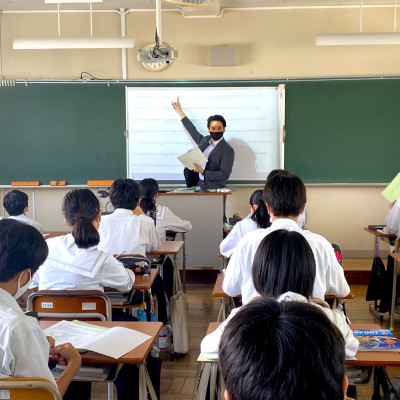
This study explores a CALL-based approach to peer evaluation in a Japanese public (junior and senior) high school EFL context. In performance tasks such as presentations, peer evaluation has traditionally relied on paper forms, largely to ensure that the student audience pays attention. In practice, these forms are often collected and set aside. Limited class time and logistical difficulties make it challenging to return peer comments to students, even when many appear to invest genuine effort in it.
Peer evaluation was redesigned using Google Forms distributed through Google Classroom. Moving to a digital platform allowed feedback to be easily aggregated and returned as individualized evaluation summaries. Although teacher involvement in managing the process remains necessary, the time required was substantially reduced.
Classroom observations suggest that access to compiled peer feedback may support formative assessment by providing concrete information students can use for reflection and improvement. Student perceptions of peer evaluation are examined through survey data. Results indicate that both conducting peer evaluations and receiving compiled feedback helped most students improve their subsequent performances and increased their motivation. A majority also expressed a preference for digital over paper forms. Implications for CALL-supported feedback practices in secondary EFL settings are discussed.